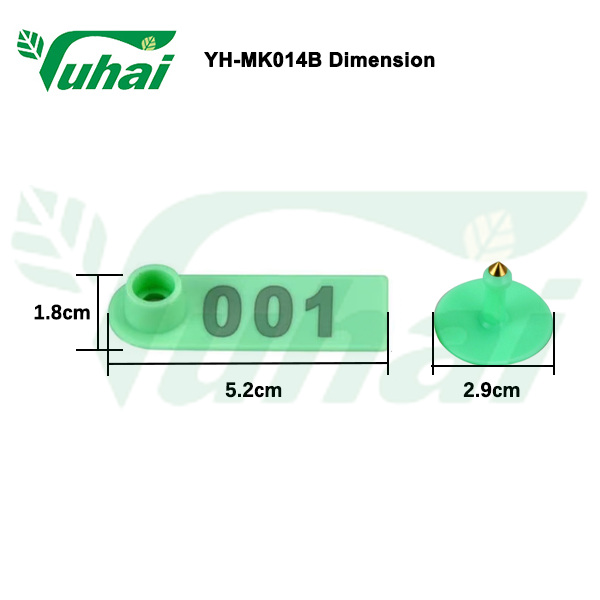
In modern livestock farming, sheep ear tags have long transcended their original function as mere identification markers, evolving into a core tool for ranch management with broad and far-reaching applications. They are no longer just tags hung on sheep ears, but bridges connecting individual animal data to precise management decisions in modern ranches.
Their most fundamental and critical application lies in individual identification and meticulous record management. Within large-scale flocks, the rapid and accurate identification of each sheep forms the foundation for all efficient management practices. By equipping each sheep with a unique ear tag, breeders can establish comprehensive individual profiles, precisely recording key data such as pedigree lineage, reproductive performance, lambing rates, weight gain, and wool quality. This provides indispensable data support for subsequent selection breeding, performance testing, and genetic improvement—the first step toward achieving breeding objectives.
Furthermore, sheep ear tags are playing an increasingly vital role in animal health and welfare monitoring, especially when integrated with Electronic Identification (EID) technology. RFID-enabled electronic ear tags can interface with smart devices like automatic sorting scales and feeding stations to monitor individual intake of feed, water consumption, and activity levels in real time. Any abnormal changes—such as a sudden decrease in feeding or sluggish activity in an individual sheep—trigger immediate alerts from the system. This enables managers to intervene before diseases manifest obvious clinical symptoms, achieving a leap from “reactive treatment” to “proactive prevention” and significantly enhancing flock health and animal welfare.
In reproductive management and herd optimization, ear tag applications are crucial. By using ear tags of different colors or numbers, managers can easily distinguish breeding batches, identify high-producing ewes, and record each ewe's lambing history and performance. This precise data forms the basis for scientific breeding decisions—such as selecting superior rams for artificial insemination or decisively culling individuals with reproductive issues or poor body condition. This continuously optimizes the flock's genetic progress and production efficiency, directly boosting the farm's economic returns.
From an industry and regulatory perspective, sheep ear tags form the cornerstone of supply chain traceability and food safety assurance. Many countries mandate the use of officially approved ear tags under their National Livestock Identification Systems (NLIS). This system tracks a sheep's entire journey from birth, through rearing and transport, to slaughter. In the event of an animal disease outbreak (such as foot-and-mouth disease), it enables rapid identification of the source and transmission pathways for efficient containment. Simultaneously, this “farm-to-table” traceability capability meets premium market consumers' expectations for food safety, providing credible endorsement for building green, organic, or regionally distinctive lamb brands.
Looking ahead, the application prospects for sheep ear tags are increasingly integrated into the broader trends of smart agriculture and precision animal husbandry. Serving as data collection terminals, these tags deeply integrate with ranch management software and automated facilities, enabling innovative applications such as automated weighing and sorting, precision feeding, and estrus monitoring. This significantly reduces labor intensity while enhancing management precision and efficiency. Furthermore, the tamper-proof design of the ear tags also contributes to asset protection and theft prevention.

 EN
EN