
 EN
EN



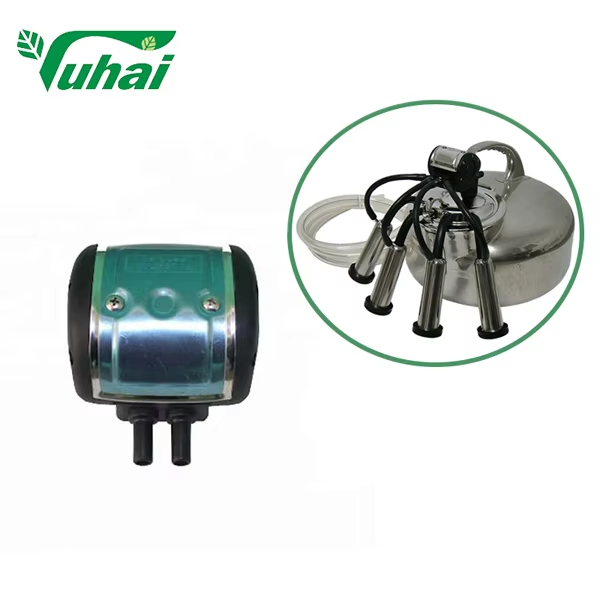
Core Operating Principles: How Pneumatic and Electronic Pulsators Generate Rhythmic Motion
Pneumatic Pulsator Functionality: Compressed Air, Valves, and Mechanical Oscillation
Pneumatic pulsators work by turning compressed air, usually between 70 and 100 psi, into regular back and forth movement through spring loaded parts like diaphragms or pistons along with carefully timed exhaust valves. When the air pressure builds up, it pushes everything outwards during what we call the milking phase. Then when the system lets some air escape, the springs pull everything back again for the rest period. The whole thing works based on principles like Bernoulli's effect plus something called mechanical hysteresis. These devices typically produce around 50 to 65 pulses every minute, staying pretty consistent within about half a second even when temperatures swing from below freezing at -10 degrees Celsius all the way up to a sweltering 50 degrees in barn environments. Mechanical timers handle the timing sequence. Air viscosity might throw things off slightly causing timing variations of about 5 percent sometimes, but since there are no electronic components involved, they naturally resist moisture damage and will safely shut down if pressure drops unexpectedly.
Electronic Pulsator Operation: Solenoid Actuation, Microcontroller Timing, and Closed-Loop Feedback
Modern electronic pulsators rely on microprocessor controlled solenoids to create accurate and adaptable pulsation patterns. The electromagnetic system behind them can hit timing accuracies down to within half a percent, allowing for around 120 to 180 different cycle settings each minute. These devices work with a programmable logic controller, or PLC for short, which keeps tweaking the duty cycles based on real time data from pressure sensors and those Hall effect types too. The PLC reacts almost immediately when it detects things like liner slippage or changes in how well the device conforms to the udder shape. Even though they're pretty power efficient, drawing less than 18 watts overall, there are still some requirements to consider. The electronics need protection against moisture so they must be housed in IP67 rated enclosures. And stable voltage supply is important too because any dropouts can cause delays of between 40 and 60 milliseconds. Compared to old fashioned pneumatic models, these electronic versions don't make any exhaust noise at all, which is definitely a plus. But they do have one drawback compared to their mechanical counterparts – they don't automatically shut down safely if there's an electrical problem somewhere in the system.
Performance Characteristics: Force, Speed, Accuracy, and Consistency
Force Delivery and Pressure Modulation Stability in Milking Cycles
Pneumatic pulsators keep vacuum levels stable within about plus or minus 5 percent even when demand fluctuates. They do this through mechanical damping that soaks up those annoying pressure spikes, which is really important for preventing damage to the teat ends. The oil free design with springs and diaphragms delivers consistent massage force during milking. These units can handle peak pressures all the way up to 220 kPa without losing their effectiveness, which makes them great for running non stop in rotary or parallel parlors day after day. Electronic alternatives reach similar pressure ranges too, but they need complicated closed loop compensation systems to stay stable. And here's the catch: these electronic systems tend to have a small delay response when there are sudden changes in load conditions, something that doesn't happen with pneumatic models.
Cycle Timing Precision and Response Latency Under Variable Load Conditions
Electronic pulsators claim impressive precision on paper, with microsecond control from those fancy programmable microcontrollers. But when it comes down to actual performance, they hit roadblocks from solenoid limitations plus all sorts of environmental factors such as sudden drops in voltage or heat stress issues. Pneumatic systems tell a different story though. They react faster to changing conditions in milking operations since air simply adapts naturally without needing any computation time. Farmers have noticed this makes all the difference in busy rotary parlors where animals move through at intervals between seven and twelve seconds apart. Trying to adjust PID settings during these rapid transitions just causes problems instead of solving them, which is why many dairy operations still rely heavily on pneumatic solutions despite newer technologies available.
Reliability, Maintenance, and Environmental Suitability
Durability, Moisture Resistance, and Temperature Performance in Barn or Factory Settings
Pneumatic pulsators work great in tough farm conditions. Their housings made from stainless steel or polymer stand up well against rust, while the completely mechanical design keeps working across temperatures ranging from minus 20 degrees Celsius all the way up to 60 degrees Celsius, even when there's no electricity. These devices beat out electronic models in places with constant high humidity because they don't have those pesky printed circuit boards that fail so often when exposed to moisture. Farmers find maintenance pretty straightforward too it basically just means greasing the moving parts every three months or so. This simplicity means operations keep running smoothly without needing technicians around constantly.
Fail-Safe Behavior and Diagnostic Capabilities: Air Leak vs. Electrical Fault Scenarios
The way things fail is pretty different between these systems. When pneumatic setups lose air pressure, they naturally shut down to safe mode. Problems with worn valves or leaking seals just make loud hissing noises that anyone can hear right away without needing any special equipment for diagnosis. On the other hand, electronic pulsators come with built-in diagnostics and log errors automatically. But when something goes wrong with solenoids burning out, sensors drifting off calibration, or corrupted firmware, technicians usually need specialty tools and proper training to fix them. For places far from service centers or those operating on tight budgets, this difference really matters because it affects how long machines stay down and how quickly repairs get done.
Total Cost of Ownership and System Integration Considerations
When looking at pulsator investments, it's important to consider the whole picture of total cost of ownership. This means thinking about what it costs to buy them, how much power they eat up over time, regular maintenance expenses, getting them integrated into existing systems, and what happens when they eventually get replaced. Pneumatic units might seem cheaper at first glance, but there's a catch. They depend heavily on compressed air which actually makes them consume between 15% and 30% more energy than electronic alternatives according to last year's Industrial Energy Report. On the flip side, electronic pulsators definitely come with a bigger price tag initially. However, these devices tend to save money in the long run because they work so precisely and last much longer. The solid state parts inside usually run for over 10 thousand hours before needing any replacement work, while pneumatic valves need servicing every 500 hours or so. That kind of difference adds up pretty quickly in maintenance costs alone.
How systems connect together affects total cost of ownership quite a bit. The newer electronic pulsators work right out of the box with most modern dairy IoT setups through CAN bus and Modbus protocols. This means farmers get automatic data recording, early warning signs when something might break down, and insights about whole herds performance. On the flip side, old school pneumatic systems fit right into existing compressed air setups without any issues, but they just don't talk back digitally at all which makes fine tuning operations pretty tough. Safety in hazardous environments is still probably the biggest consideration though. Pneumatic equipment doesn't spark so it's naturally safer around flammable materials. But electronic versions need special explosion proof housings that bump up both price tags and installation headaches, especially in grain storage facilities or other dusty industrial settings where sparks could be dangerous.
| Cost Factor | Pneumatic Pulsators | Electronic Pulsators |
|---|---|---|
| Energy Consumption | Higher (compressed air generation) | Lower (precision-controlled) |
| Maintenance Frequency | Every 500 operating hours | Every 10,000+ operating hours |
| Connectivity | Limited (physical air lines) | Advanced (digital protocols) |
| Hazardous Environment | Better suitability | Requires explosion-proofing |
Frequently Asked Questions (FAQ)
What is the main difference between pneumatic and electronic pulsators?
Pneumatic pulsators use compressed air to generate movement while electronic pulsators rely on microprocessor-controlled solenoids for precision operation.
Which type of pulsator is more energy-efficient?
Electronic pulsators are generally more energy-efficient due to precision control, whereas pneumatic pulsators consume more energy due to compressed air usage.
How do pneumatic and electronic pulsators perform in terms of maintenance?
Pneumatic pulsators require maintenance every 500 hours, whereas electronic pulsators have longer maintenance intervals, typically over 10,000 operating hours.
Are there environmental conditions where one type of pulsator is preferred over the other?
Pneumatic pulsators are more suitable for environments with high moisture or flammable materials, while electronic pulsators require protection against moisture and may need explosion-proof housing in certain conditions.
How do pulsators integrate with modern dairy IoT systems?
Electronic pulsators easily integrate with modern IoT systems through digital protocols, while pneumatic systems do not offer digital communication capabilities.
Table of Contents
- Core Operating Principles: How Pneumatic and Electronic Pulsators Generate Rhythmic Motion
- Performance Characteristics: Force, Speed, Accuracy, and Consistency
- Reliability, Maintenance, and Environmental Suitability
- Total Cost of Ownership and System Integration Considerations
-
Frequently Asked Questions (FAQ)
- What is the main difference between pneumatic and electronic pulsators?
- Which type of pulsator is more energy-efficient?
- How do pneumatic and electronic pulsators perform in terms of maintenance?
- Are there environmental conditions where one type of pulsator is preferred over the other?
- How do pulsators integrate with modern dairy IoT systems?