
 EN
EN



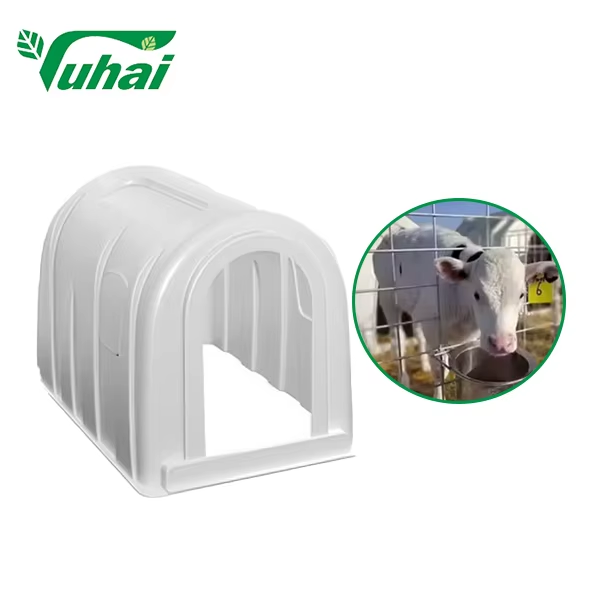
Strategic Site Rotation for Pathogen Control
Reducing Pathogen Buildup Through Timely Relocation
Portable calf hutches make it possible to rotate sites regularly, which helps stop those pesky pathogens from getting a foothold and threatening newborn calves' health. Stationary housing is different because when animals stay put, viruses, bacteria, and all sorts of nasty parasites just build up in the soil over time. Moving these hutches to fresh ground whenever new calves arrive cuts down on their contact with manure that carries disease. Studies have found something pretty alarming actually - in unpaved areas, harmful organisms can pile up to dangerous levels after just about a month of constant use. When farmers move things around before reaching that 30 day mark, they cut the risk of cryptosporidium and rotavirus infections by almost half according to research from the Journal of Dairy Science. The ability to move these units simply interrupts the cycle where sick calves infect the next group coming through.
- Preventing saturation of bedding zones with manure-borne pathogens
- Allowing sunlight exposure and natural microbial decomposition to sanitize vacated sites
- Eliminating cross-contamination between successive calf cohorts
Infrastructure-Friendly Mobility: No Compromise on Drainage or Utility Access
Modern calf hutch designs support effortless relocation without sacrificing utility integrity or site functionality. Units feature integrated skid systems enabling one-person repositioning while maintaining secure connections to water lines and drainage channels. Operators report relocation times under 20 minutes—with zero disruption to:
- Slope-optimized runoff — Pre-installed leveling feet preserve the recommended 3–5° drainage gradient during moves
- Utility continuity — Quick-connect fittings ensure uninterrupted operation of automatic waterers and milk transport lines
- Pasture access — Strategic placement sustains calf access to fresh forage while minimizing soil compaction
Field trials across 12 Midwestern operations found these portable systems reduced mud-related health issues by 34% compared to fixed housing—while delivering equivalent reliability in feed and water delivery.
Streamlined Cleaning and Sanitation of Portable Calf Hutch Units
Time Savings Per Calf Hutch: Field Data from 12 Midwestern Dairy Operations
Looking at operations from twelve different dairies spread throughout the Midwest showed that cleaning portable milking units was much more efficient than dealing with fixed housing systems. The workers were able to finish their cleaning rounds about 30 to 40 percent quicker for each hutch they worked on. Why? Because these portable units could be moved easily to specific wash areas where there was complete access around every surface. No more struggling in tight spaces, taking apart equipment piece by piece, or trying to manage wastewater right there on site. The dairy staff actually kept track of their work times and saw these savings hold up even during busy seasons when diseases tend to spread more. This translated into roughly fifteen extra units getting properly cleaned each day by the same worker without anyone having to put in longer hours.
Field-Based vs. Fixed Housing: Comparing Sanitation Logistics and Labor Burden
Fixed housing sanitation requires complex coordination: moving heavy equipment into barns, relocating or isolating calves, and managing uncontrolled runoff. Portable units bypass these constraints through centralized, station-based processing. Key logistical advantages include:
| Factor | Fixed Housing | Portable Hutch Solution |
|---|---|---|
| Equipment Transport | Heavy machinery required | None—hutches moved to station |
| Animal Disturbance | Requires relocation or isolation | Zero-contact cleaning |
| Water Management | Complex, variable drainage | Controlled, contained runoff |
| Labor Intensity | High risk of repetitive strain | Ergonomic standing-position work |
This approach reduces physical strain and cuts secondary labor by 22%, according to peer-reviewed dairy workflow studies. Simplified protocols also correlate with higher staff compliance and fewer procedural deviations.
Labor Efficiency and Operational Simplicity in Daily Calf Hutch Management
Portable calf hutches significantly enhance labor efficiency in daily calf management. Their design eliminates the need for stall-by-stall cleaning or group pen disassembly—reducing daily calf care time by 30–50%, per validated dairy efficiency studies. Staff accomplish core tasks more efficiently:
- Feeding is completed in 40% less time than in fixed housing systems
- Health checks integrate seamlessly into routine feeding—no additional handling required
- Rapid unit relocation supports adaptive pasture rotation and weather-responsive management
Staff can handle around 25 to 30 percent more calves for every hour they work without cutting corners on personalized care. When workflows get streamlined, workers actually gain back about two to three hours each day when looking at 100 calves total. That extra time gets put to good use for things like checking animals' health status, keeping track of treatments given, and entering all that information into records systems. Putting facilities close to where feed is stored or where treatments happen makes a big difference too. Workers don't waste precious minutes running back and forth during those moments when quick action really matters for calf welfare.
Individual Housing Benefits: Disease Prevention and Health Monitoring
Calving-to-Weaning Morbidity Reduction: Evidence from USDA-ARS Trials
Putting calves in individual hutches cuts down on disease spread because they're physically separated during those first few weeks when their immune systems aren't fully developed yet. According to some USDA studies, farms saw about a 40% drop in sick calves before weaning when using hutches instead of group pens. The reason? No direct contact between animals. This setup stops the spread of common problems like scours and pneumonia, which are responsible for most calf deaths on dairy farms across America. When calves have their own space, farmers can spot health issues much sooner. They notice things like when a calf isn't drinking milk properly, seems sluggish, or has a runny nose without other calves distracting them visually or behaviorally. Getting treatment right away makes a big difference in recovery chances and means fewer antibiotics need to be used overall. Plus, vets find it easier to keep track of what's going on, and there's way less work involved when dealing with outbreaks since everyone isn't getting sick at once.
FAQ
What are the benefits of using portable calf hutches?
Portable calf hutches help in reducing pathogen build-up, improve sanitation efficiency, enhance labor productivity, and support better disease prevention and monitoring.
How does site rotation help in pathogen control?
Regular site rotation prevents the buildup of pathogens in the soil and reduces calves' exposure to manure-borne diseases.
What makes portable calf hutches easier to clean than fixed housing?
Portable hutches can be moved to dedicated wash areas allowing complete access for cleaning, reducing complexity and labor intensity.
How do portable calf hutches reduce labor time?
These hutches simplify daily management tasks, allowing for faster feeding and health checks, and ease in relocation, all contributing to overall time savings.
What impact does individual housing have on calf health?
Individual housing prevents direct contact between calves, reducing the spread of diseases, allowing for early detection of health issues, and reducing antibiotic usage.