
 EN
EN



Choosing the right chicken feeder is one of the most practical decisions a poultry keeper can make, whether you are managing a small backyard flock or running a large-scale commercial operation. The type of feeder you select directly affects feed waste, flock health, labor requirements, and overall farm efficiency. With so many designs available on the market today, understanding the differences between each type helps you match the right solution to your specific setup, bird count, and management style.
A well-designed chicken feeder does more than simply hold feed. It controls the rate at which birds access grain, minimizes spillage, protects feed from moisture and pests, and reduces the time a farmer spends on daily feeding routines. From simple trough-style units to fully automated systems, each chicken feeder category serves a distinct purpose and suits a particular scale of operation. This article breaks down the major types, explains how each one works, and helps you identify which design fits your farm best.
Trough and Pan Style Chicken Feeders
The Classic Trough Design
The trough-style chicken feeder is one of the oldest and most widely recognized designs in poultry farming. It consists of a long, open container that holds feed along its length, allowing multiple birds to eat simultaneously from either side. Trough feeders are typically made from galvanized metal or durable plastic, and they are available in a wide range of sizes to accommodate small backyard flocks or larger groups of birds.
One of the key advantages of a trough chicken feeder is its simplicity. There are no moving parts, no mechanical components, and no complex installation requirements. Farmers can fill the trough manually and birds have immediate access to feed. However, open trough designs are more susceptible to feed contamination from droppings, feathers, and moisture, which means they require more frequent cleaning and monitoring to maintain feed quality.
For backyard flocks of fewer than twenty birds, a trough chicken feeder can be a cost-effective and practical choice. The design is easy to clean, easy to refill, and straightforward to move around the yard or coop. Many small-scale keepers use trough feeders as a primary or supplemental feeding station, especially when introducing new birds to a flock.
Pan Feeders for Chicks and Starter Flocks
Pan-style feeders are shallow, wide containers designed primarily for young chicks and starter flocks. Because newly hatched chicks have limited reach and coordination, a low-profile pan chicken feeder allows them to access feed without struggling or competing aggressively with larger birds. The wide surface area means many chicks can feed at once, reducing stress and promoting even growth across the flock.
Pan feeders are often used during the brooding stage and are gradually replaced with larger feeder types as birds mature. Some pan designs include a central fill tube that allows feed to flow down into the pan by gravity, keeping the feeding surface consistently stocked without requiring constant manual attention. This gravity-fed pan chicken feeder is a popular choice for small-scale hatcheries and backyard breeders who want a low-maintenance solution for young birds.
Hanging and Tube Chicken Feeders
Gravity-Fed Hanging Feeders
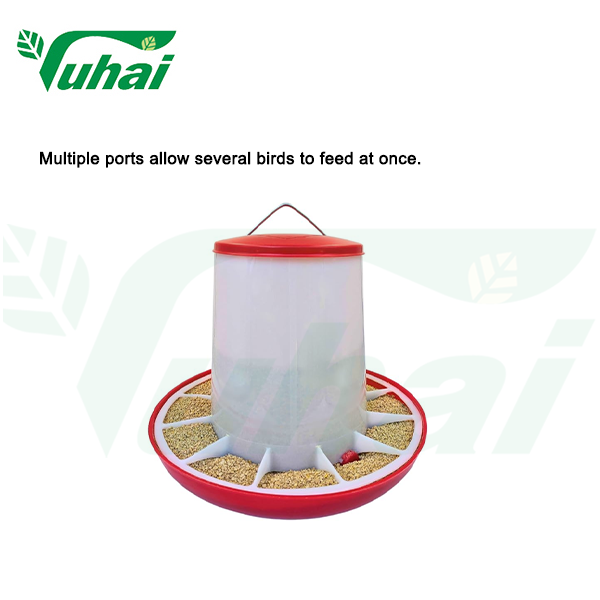
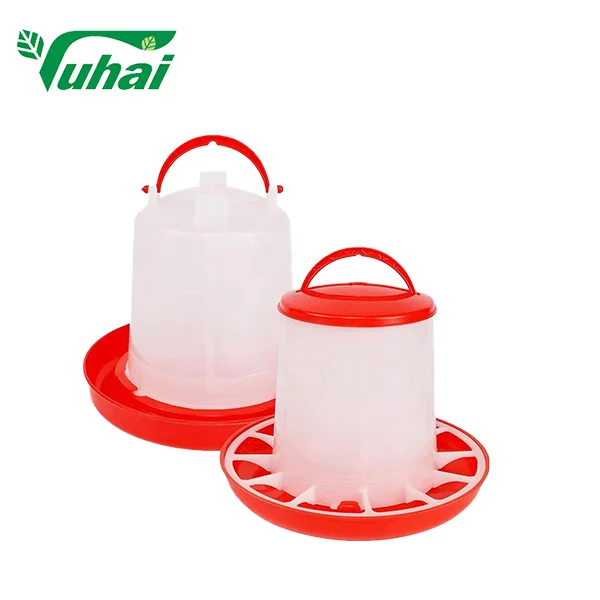
The hanging chicken feeder is one of the most popular designs for both backyard and mid-scale commercial operations. It typically consists of a cylindrical tube or container that holds a reservoir of feed, with a circular pan or tray at the bottom where birds access the grain. As birds eat from the tray, gravity pulls more feed down from the reservoir, keeping the feeding surface consistently stocked throughout the day.
Hanging feeders are suspended from the ceiling or a support beam at the appropriate height for the birds being fed. Keeping the feeder at back height reduces the amount of feed that birds can scratch or bill out of the tray, which significantly cuts down on waste. A well-positioned hanging chicken feeder can reduce daily feed loss by a meaningful margin compared to open trough designs, making it a smart investment for anyone looking to improve feed conversion efficiency.
These feeders are available in a range of capacities, from small 3-pound units suitable for a few backyard hens to large 30-pound or 50-pound models designed for commercial grow-out houses. Plastic hanging feeders are lightweight and easy to clean, while metal versions offer greater durability in high-humidity environments. The hanging chicken feeder is widely regarded as one of the most versatile and cost-effective options across different farm scales.
Tube Feeders for Controlled Access
Tube-style feeders are a variation of the hanging design that emphasizes controlled access and reduced waste. The tube body is narrow and tall, holding a large volume of feed while exposing only a small amount at the base for birds to consume. This design discourages birds from digging through feed or scattering it across the floor, which is a common problem with open-access designs.
A tube chicken feeder is particularly effective in environments where feed waste is a significant cost concern. In commercial broiler or layer houses, even small reductions in daily feed waste can translate into substantial savings over a production cycle. The tube design also helps keep feed dry and protected from environmental contamination, which is important for maintaining feed quality and bird health over time.
Automatic and Mechanical Chicken Feeders
Auger and Belt-Driven Automatic Systems
Automatic chicken feeder systems are the standard choice for large-scale commercial poultry operations. These systems use mechanical components such as augers, conveyor belts, or chain-and-pan mechanisms to distribute feed from a central storage bin to multiple feeding points throughout a poultry house. The entire process is controlled by timers or sensors, allowing farm managers to set precise feeding schedules without manual intervention.
An automatic chicken feeder system dramatically reduces labor requirements on large farms. Instead of workers manually filling individual feeders multiple times per day, a single automated system can service thousands of birds across a long poultry house with minimal human involvement. This not only saves time but also reduces the stress placed on birds by frequent human entry into the house, which can have a positive effect on growth rates and egg production.
The investment cost for an automatic chicken feeder system is significantly higher than manual alternatives, but the return on investment is well-documented in commercial poultry production. Reduced labor costs, improved feed conversion ratios, and more consistent bird performance typically justify the capital expenditure within a few production cycles. For operations managing tens of thousands of birds, automation is not a luxury but a practical necessity.
Sensor-Activated and Smart Feeders
A newer category of automatic chicken feeder uses sensor technology to detect when feed levels in the pan drop below a set threshold, triggering a refill cycle automatically. Some advanced models connect to farm management software, allowing operators to monitor feed consumption data in real time and adjust feeding schedules remotely. These smart feeder systems are gaining traction in precision poultry farming, where data-driven management is becoming increasingly important.
For backyard keepers who want some level of automation without the complexity of a full commercial system, smaller sensor-activated chicken feeder units are available. These compact devices can be programmed to dispense feed at set intervals, which is particularly useful for keepers who travel frequently or cannot maintain a strict daily feeding schedule. The convenience factor makes this type of chicken feeder an attractive option for hobby farmers and small-scale producers alike.
Outdoor and Weather-Resistant Chicken Feeders
Covered and Weatherproof Designs
For flocks that spend significant time outdoors in free-range or pasture-based systems, a weather-resistant chicken feeder is essential. Exposure to rain, humidity, and direct sunlight can quickly degrade feed quality, leading to mold growth, nutrient loss, and potential health risks for the flock. Covered feeder designs use a roof or hood structure to shield the feed tray from precipitation while still allowing birds easy access from the sides.
A well-designed outdoor chicken feeder typically features drainage holes in the base tray to prevent water accumulation, UV-resistant materials to withstand prolonged sun exposure, and a secure lid or cover that can be latched to prevent wildlife access. These features are especially important in regions with variable weather conditions, where a feeder may be exposed to both heavy rain and intense heat within the same week.
Plastic outdoor chicken feeder models are popular because they resist rust and corrosion, are lightweight enough to move easily, and can be cleaned quickly with a hose. Galvanized metal versions offer greater structural durability and are preferred in environments where rodents or larger wildlife may attempt to damage the feeder. Selecting the right material for your outdoor chicken feeder depends on your local climate, the size of your flock, and the level of wildlife pressure in your area.
Rodent-Resistant and Pest-Proof Feeders
Pest pressure is a serious concern for any poultry operation, and a poorly designed chicken feeder can become an open invitation for rodents, wild birds, and insects. Rodent-resistant feeder designs use treadle mechanisms or weighted covers that only open when a chicken steps on a platform, preventing smaller animals from accessing the feed. These treadle-style feeders are particularly popular among backyard keepers who want to reduce rodent activity around their coops.
A treadle chicken feeder requires birds to learn how to operate the mechanism, which typically takes a few days of training. Once birds understand the system, they use it reliably and the feeder remains closed at all other times. This design is highly effective at reducing feed theft by wild birds and rodents, which can represent a significant hidden cost for farms that use open-access feeders without any protective mechanism.
Selecting the Right Chicken Feeder for Your Operation
Matching Feeder Type to Flock Size and Management Style
The most important factor in choosing a chicken feeder is matching the design to the actual scale and management style of your operation. A backyard keeper with ten hens has very different needs from a commercial producer managing ten thousand broilers. For small flocks, a hanging gravity-fed chicken feeder or a treadle-style outdoor unit typically provides the best balance of convenience, waste reduction, and cost-effectiveness.
For mid-scale operations with several hundred birds, tube feeders and larger hanging units with higher feed capacities reduce the frequency of manual refilling while still keeping costs manageable. At the commercial scale, automatic chicken feeder systems become the logical choice, as the labor savings and feed efficiency gains quickly outweigh the higher upfront investment. Understanding where your operation falls on this spectrum helps narrow down the options significantly.
Considering Feed Type and Bird Age
The type of feed you use also influences which chicken feeder design works best. Crumble and mash feeds flow differently than pellets, and some feeder designs handle one type better than the other. Tube and hanging feeders with narrow openings work well with pellets but may clog with fine mash feeds. Pan feeders and trough designs are more accommodating of different feed textures and are often preferred for starter and grower rations fed to young birds.
Bird age is another critical consideration. Young chicks need low-profile, easy-access feeders that do not require significant reach or strength to operate. As birds grow, feeder height should be adjusted to match their back height, which reduces waste and encourages proper feeding posture. A chicken feeder that is too low encourages birds to scratch feed out of the tray, while one that is too high may discourage smaller or younger birds from eating adequately.
Investing time in selecting the right chicken feeder for each stage of production pays dividends in feed efficiency, bird health, and overall farm profitability. Many experienced poultry keepers maintain multiple feeder types to serve different age groups and production stages simultaneously, rotating equipment as birds move through the production cycle.
FAQ
What is the most efficient chicken feeder for reducing feed waste?
Hanging tube-style and treadle-operated chicken feeder designs are generally the most effective at reducing feed waste. By controlling bird access and keeping the feed tray at the correct height, these designs minimize the amount of feed that birds can scratch or bill out onto the floor. For commercial operations, automatic systems with precisely calibrated pan depths also contribute significantly to improved feed conversion ratios.
How many chickens can one chicken feeder serve?
The number of birds a single chicken feeder can serve depends on the feeder's size and design. As a general guideline, each bird should have access to at least 2.5 to 5 centimeters of feeder space. A standard hanging feeder with a 30-centimeter diameter tray can typically serve 15 to 25 birds comfortably. For larger flocks, multiple feeders should be distributed evenly throughout the housing area to prevent competition and ensure all birds have adequate access to feed.
Can a chicken feeder be used outdoors year-round?
Yes, many chicken feeder models are specifically designed for year-round outdoor use. Weather-resistant plastic and galvanized metal feeders with covered tops and drainage features can withstand rain, humidity, and temperature fluctuations effectively. In regions with heavy snowfall or freezing temperatures, it is advisable to check feeders daily to ensure feed has not become wet or frozen, as compromised feed can cause digestive issues in the flock.
How often should a chicken feeder be cleaned?
A chicken feeder should be cleaned at least once per week under normal conditions, and more frequently in hot or humid weather when feed spoilage occurs faster. Remove any leftover feed, wash the feeder with warm water and a mild disinfectant, rinse thoroughly, and allow it to dry completely before refilling. Regular cleaning prevents mold growth, reduces the risk of disease transmission, and helps maintain the structural integrity of the feeder over time.